
by Sant SS Guru Dev Singh Khalsa, Rome, Italy
Courtesy of the #61 Fall 2016 SDI Ministry Newsletter
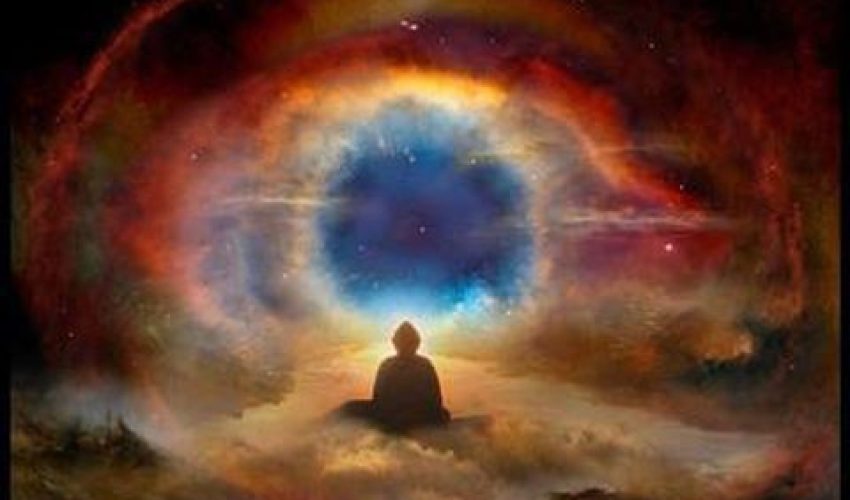
How do we experience the Subtle Body? It is experienced through awareness. Unfortunately, 99.9% of the people are not aware, or not aware enough to recognize their experience. So we meditate and bring stability to our meditation and awareness. If you understand the Subtle Body, imagine it like a radio transmission, like waves. The archetype system we learned from the Siri Singh Sahib of the eleven Light Bodies can be paralleled with the ten Gurus of the Sikhs, the eleventh being the Siri Guru Granth Sahib. The ninth body (the Subtle Body), in Sikh Dharma can be understood through Guru Teg Bahadur, the ninth Guru.
Our experience needs to be sustained by the intuitive intellect, which is the intuition and the applied intellect. You must have the experience of these bodies or it makes no sense. If you have the experience of the bodies, then you can localize how your Subtle Body is working, how your Pranic Body is working, how your Arc Line is working, how your Positive Mind or Negative Mind is working, and what the connection is with your Soul. If you are not conscious of that, then they become superstitions, because then you only believe that there’s an Arc Line, etc. Don’t believe it! Either you experience it or it makes no sense.

Interplay of numbers and attractive abstract forms on the subject of mathematics, science, computing, modern technologies and numerology
Symbols, Reality, and Experience
A problem with the Western culture is that it thinks of the symbol first, then they think about where it might fit into reality. That is not reality. This process is the complete reverse of it: First, you have an experience. Next comes the applied intellect, when you go beyond your limitations of your own condition, built on your propositions. After that, you have intuition.
You allow something you don’t see…and at that point, intuition starts…and you break your limits. And how does it happen? It happens by the intuitive intellect. So if something is happening, the Subtle Body needs to notice it. Perceive it through your awareness and experience it. Don’t pretend you know or believe it. Again, the Subtle Body without experience is superstition/fantasy.
The depth you have to be in, in order to relate to the Subtle Body depends on your ability to be in a state of awareness; it is not a belief. So develop your meditative mind, develop your silence and your ability to maintain stability in your silence. As your awareness of the Subtle Body increases, so does your ability to heal and to help people.
There are thousands of kriyas and hundreds of them that can develop your experience of the Subtle Body. Practice, recognize, stabilize your meditative state. Then we can see how the subconscious moves in a meditative state and understand the Impact. In this time of the sensory human, we must merge and understand our impact.
Sunniai and Manniai
This tradition of Sikhi can be difficult, especially for Westerners, as it is perhaps the only tradition that cannot be taught via theological discussions—where theology cannot exist. You hold a spiritual existence via two processes, both described by Guru Nanak in Japji Sahib. First, you must to relate (listen/sunniai) and you have the capacity to contemplate, experience. Second is the moment you agree (manniai). These practices are essential to the experience of Sikhi.
The concept of Dharma is that you have your Karma, you stabilize, optimize and elevate it to the level of Dharma. It is your Karma to be in this place and if you elevate it that is Dharma.
The impact of direct experience in a very practical way has an impact in the way we function. The projective meditative mind has a specific way to integrate, submerge, and impact the system. Living in a natural state of existence, it is possible to share through our roles as Ministers and teachers and our presence to bring a person from a state of belief to a state of experience; from a person who is insensitive to a person of perception/awareness.
About the Author
 Sant SS Guru Dev Singh, PhD
December 10, 1948 – April 5, 2021
A Sikh and student of Yogi Bhajan, Sant Singh Sahib Guru Dev Singh was born in Puebla, Mexico in 1948. He felt the call to study the indigenous traditions of his country, which had started to spread and become popular among youth in the 1960s and ’70s. As a youth in Puebla, Mexico, a Totonaca Indio chose him as his student and taught him to look, to see. As is the tradition, he was taught in silence.
Guru Dev Singh began practicing Kundalini Yoga in 1971. In 1976, he met Yogi Bhajan; two years later he began to study the healing practice of Sat Nam Rasayan®, under Yogiji’s guidance.
In 1981 Guru Dev Singh embraced the Sikh religion and was ordained as a Sikh Dharma International Minister in 1987.
In 1988 Yogi Bhajan first spoke to him about the Sacred Space asked him to go to Rome to create a school where he could teach the healing method orally. Guru Dev Singh moved to Rome and started a pilot class.
In 1992, the Siri Singh Sahib passed the responsibility to Guru Dev Singh to keep the Name and the Lineage of this sacred teaching. He told him this healing would be known as Sat Nam Rasayan. In the same year, he founded the Sat Nam Rasayan School in Assisi, Italy, which has drawn countless students and practitioners from all over the world.
For more than 40 years, Guru Dev Singh combined the ancient Mayan, Toltec, and Curandero traditions of Mexico with Kundalini Yoga and yogic healing. He often taught at 3HO Summer Solstice and at Khalsa Women’s Training Camp in New Mexico.
He left his body on April 5, 2021, in Chiapas, San Cristobal, Mexico. On April 7th, a global meditation was hosted in Mexico City (and virtually) in honor of his transition.
. In 1997, the Siri Singh Sahib declared (by the authority of the Ministry of Sikh Dharma of the Western Hemisphere) Guru Dev Singh a Saint. According to this tradition, a Saint is a person of Awareness.






Leave a Reply