
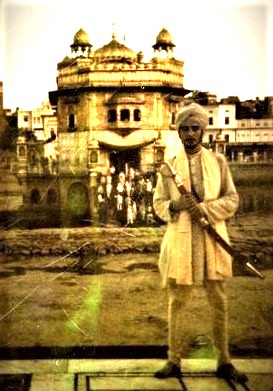
The following excerpts about Bhai Sahib Dayal Singh are lovingly commemorated by Guru Fatha Singh Khalsa and can be found in his book, Bhai Sahib.
December 31, 1954 – September 22, 1975
Bhai Sahib Dayal Singh died in a car accident in Indiana on his way to the Golden Temple. He was a young saint, teacher and gentle warrior. Yogiji called him “the best flower in his garden”.
Yogiji loved Bhai Sahib for his humility, yes. More than that, he appreciated Dayal Singh’s stated intention to take on the legacy of his teacher, to master it and become ten times great than him. Yogiji loved and encouraged that.
Without a word from Yogi Bhajan, Bhai Sahib also took on learning the Gurmukhi script to read Gurbani. Then, he learned Punjabi to speak with our Punjabi Sikh family. Bhai Sahib recognized early that our destiny as Sikh Yogis and Yogi Sikhs is inextricably bound to the greater destiny of tens of millions of Sikhs worldwide who love the Guru and mostly speak Punjabi.
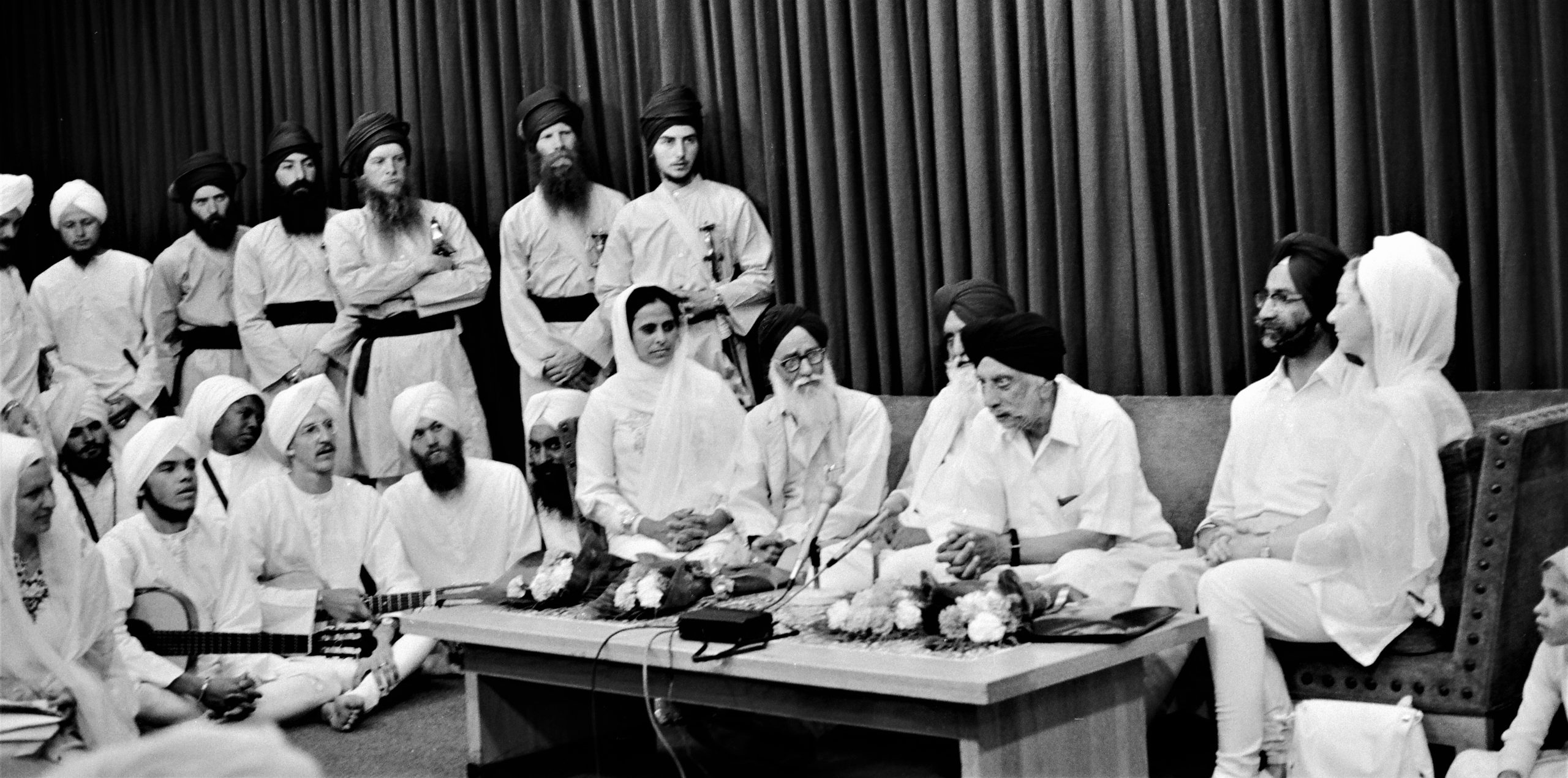
Bhai Sahib (center rear) & Shakti Parwha (far right) & Sangat
As Shared by Mukhia Sardarni Sahiba Shakti Parwha Kaur Khalsa:
He was not quite twenty-one, this young man we called “Bhai Sahib Dayal Singh,” yet every life he touched was enriched, every heart opened more to the love of God and Guru. For Bhai Sahib Dayal Singh was a living example of God’s power and Guru’s grace.
I met him when he was just fifteen years old… Dale Sklar was more than thirty-five years my junior, but he soon earned my respect and admiration, and I looked to him for support and inspiration when my duties and responsibilities weighed heavily. He never spoke a word against anyone, nor would he listen to anything negative about anyone.
People were automatically on their best behavior around Bhai Sahib because the purity of his consciousness simple brought out the best. He had a sense of humor too and was not by any means sanctimonious. He enjoyed life and wanted everyone else to enjoy it too.
He was blessed with an immediate affinity for Siri Guru Granth Sahib and spent countless hours poring over its pages, virtually teaching himself the sacred Gurmukhee language. I had to remind him that everyone else could not learn so fast, nor had such a burning zeal to know the Guru…
The loss to Sikh Dharma at the death of Bhai Sahib Dayal Singh is inestimable. My sense of personal loss is beyond description. Although time has dimmed the intensity of grief, there is a cavity in my heart that can never be filled.
Truly, I know I should be happy for that pure soul that has rejoined his Creator, but from a selfish, human point of view, I cannot but regret the departure from this planet of such a bright, loving, giving spirit who brought happiness, inspiration and hope to countless numbers of people during the brief span of his life, and whom I had the most beautiful relationship of mother to son, unique and precious in my entire experience of life.
May we never forget him.
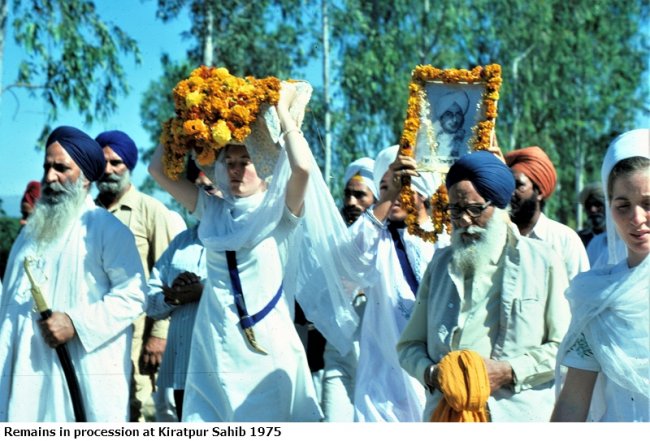
Bhai Sahib Dayal Singh Remains in Procession at Kiratpur Sahib 1975
The Life of Bhai Sahib Dayal Singh – Saint, Teacher & Gentle Warrior
When an Indian yoga teacher came to give a class at his Los Angeles high school in 1970, Dale Sklar recognized at once a calling from out of the ordinary. He quickly attached himself as a devoted student to Yogi Bhajan and the fledgling American Sikh community a few miles’ bike ride from his home. For his sheer focus, love and devotion to his new path, Dale was recognized as “Bhai Sahib” – a religious title meaning honoured brother – “Dayal Singh” – a spiritual name meaning lion of compassion, before his 18th birthday.
Towering above fellow Sikhs many years his senior, Bhai Sahib lived an exemplary life of service and good humour until his passing a car crash – on the way to India – at the age of 19. This is his story told in the words of people who knew, loved and respected Dayal Singh, and in nearly 100 photos of his brief life as a Sikh in America and India in the early 1970s.
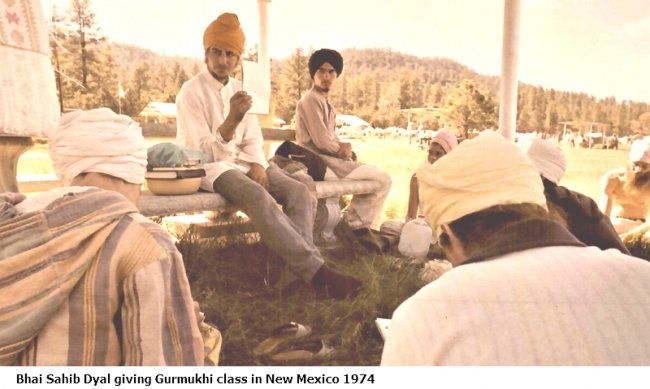
In the words of Bhai Sahib:
In 1970, at the age of fifteen, I began taking classes from Siri Singh Sahib Harbhajan Singh Yogi. In the yoga classes, he recommended that we not cut our hair or beards for scientific reasons.
He suggested that we read a book called The Sacred Writings of the Sikhs (a translation of selected parts of Guru Granth Sahib). He instructed us to recite Ik Ong Kar Sat Nam Siri Waheguru.
He also had us recite certain lines of Gurbaanee such as Jis Neech Ko Ko-ay Na Jaan-ai… Guru Raam Daas Raakho Sarna-ee… Gobinday Mukanday Udaaray Apaaray… as well as the Mool Mantra. He enjoined us to attend the once-a-month service at the Sikh Study Circle, and he suggested that we learn Gurmukhee.
In the house of Siri Singh Sahib Ji, I began studying Gurmukhee. I had a great drive and in two days I could fully read. At that point, I began to read Guru Granth Sahib with corresponding translation. Gurbaanee became the focal point of my life…
-
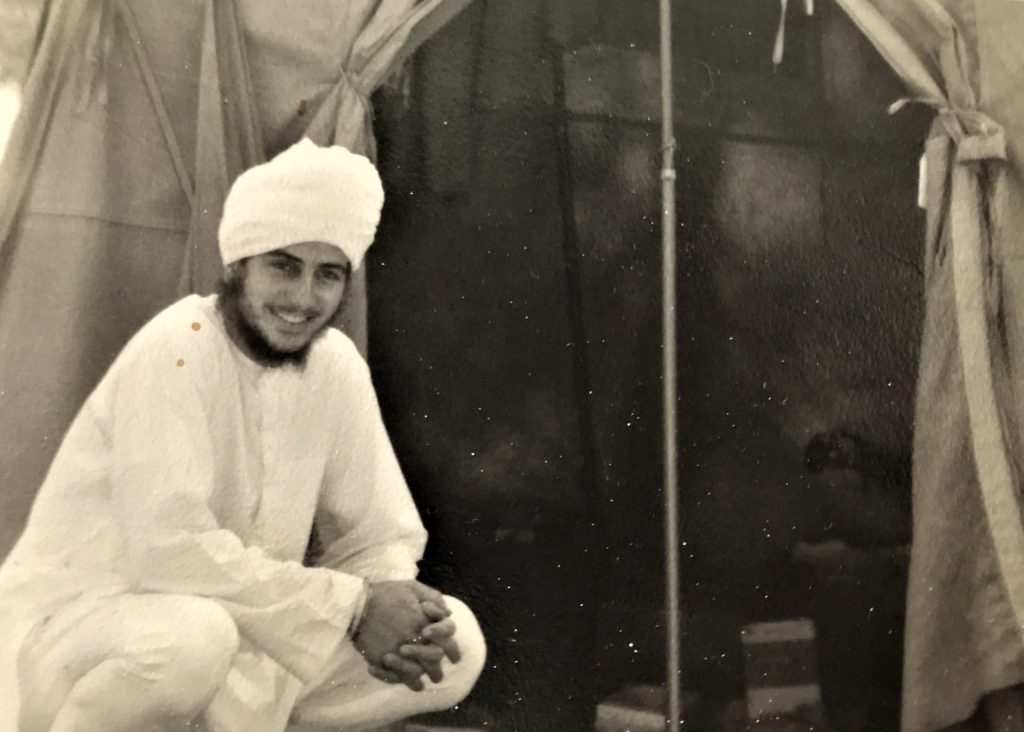
- Bhai Sahib at Solstice Camp
-
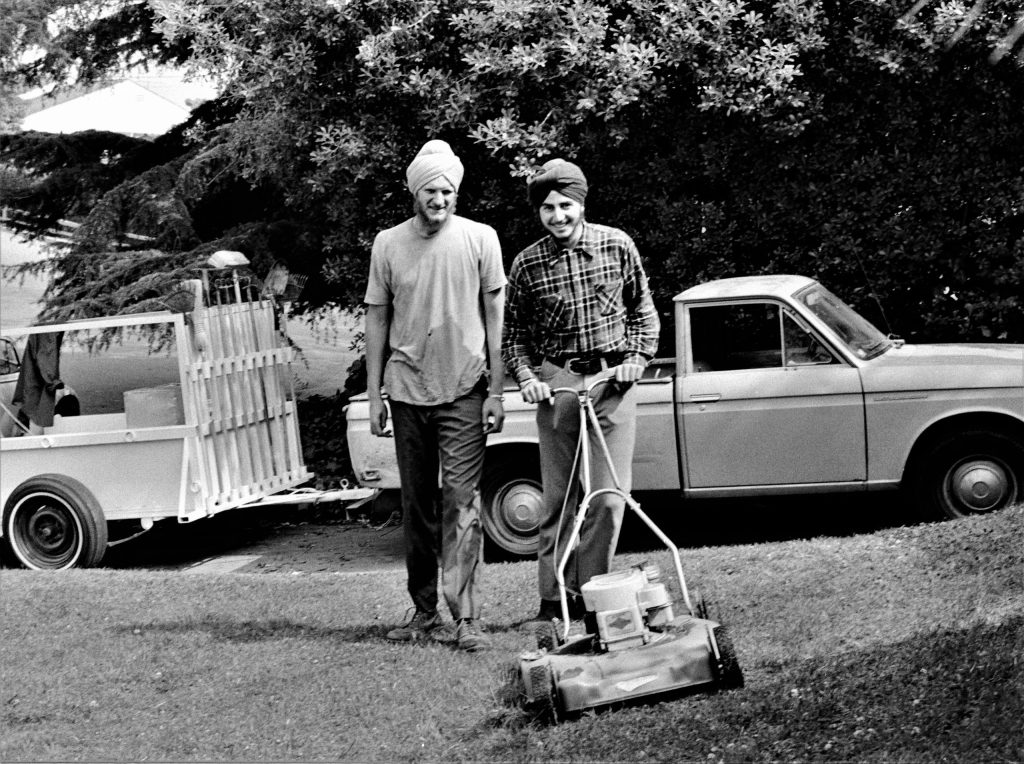
- Bhai Sahib and Friend in LA
Ten Times Better
One day, Yogi Bhajan was reading something.
Dale Singh asked, “What is it?”
Yogiji replied, “Well, it is a very, very old book.”
Dale Singh inquired, “What is in it?”
Yogiji answered, “There are a lot of old things.”
“Can I read it?”
“You don’t know the language.”
Dale Singh queried, “Well, wait a minute. What is this language?”
And Yogiji replied, “The language is so-and-so.”
Dale Singh said, “Fine, fine, fine. Thank you, Sir. Can I go?”
“Go.”
Months later, Dale Singh asked Yogiji, “Sir, where is that book?”
And Yogiji answered, “What do you want with that book?”
“Well, I want to see it.”
Yogiji pulled out a drawer and took out that book. “Here it is.”
“Can you give it to me?”
Yogiji replied, “Well, have it!”
Dale Singh stood there are started reading from the book.
Yogiji expressed his surprise, “What?!”
Dale Singh said, “I learned the language.”
Yogiji queried, “Why you did all that?”
Dale Singh said, “I have to be ten times better than you. Isn’t it true?”
Yogiji replied, “You sound right.”
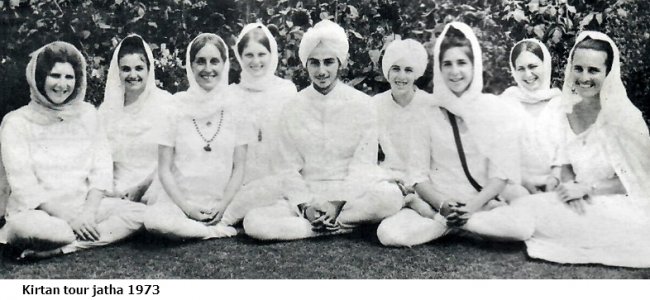
Journey to the Guru’s Land
In March of 1973, Dale Singh set out on the journey of a lifetime. Together with eight others, most of them wives of ashram heads, he flew from Los Angeles to the fabled land of India. Accompanying him were Bachitar Kaur from the Midwest US, Ganga Bhajan Kaur from Washington, D.C., Wilma Kaur Engstrom from Eugene, Oregon, Gurcharan Kaur from Pomona, California, Sat Nam Kaur and Satwant Kaur from Tucson, Arizona, and Ram Das Kaur and Sat Kirn Kaur from San Diego, California.
Yogi Bhajan’s wife, Bibiji Inderjit Kaur had already left the month before to make preparations. Their objective was to do daily Sadhana at Harimandir Sahib (the Golden Temple) in Amritsar, study the sacred script of Gurbaanee, and to share their love of the Sikh way of life by performing Keertan, singing the sacred Songs of the Guru.
Arriving in New Delhi airport at 2 a.m., everyone was transported directly to Bangla Sahib Gurdwara. They were surprised to find a congregation awake at that hour in the large Sikh temple, everyone immersed in reciting Guru Arjan’s healing Sukhmani Sahib.
After paying their respects at the Gurdwara, the group settled in Yogi Bhajan and Bibiji’s house at C-24 Nizamuddin East, a single-story row house with three or four rooms and a central courtyard. There, they met Bahadur Singh who would be helpful in many ways during their visit. They were also introduced to Amarjit Kaur, who would teach them to play harmonium and sing Gurbaanee Keertan, the Guru’s Songs.
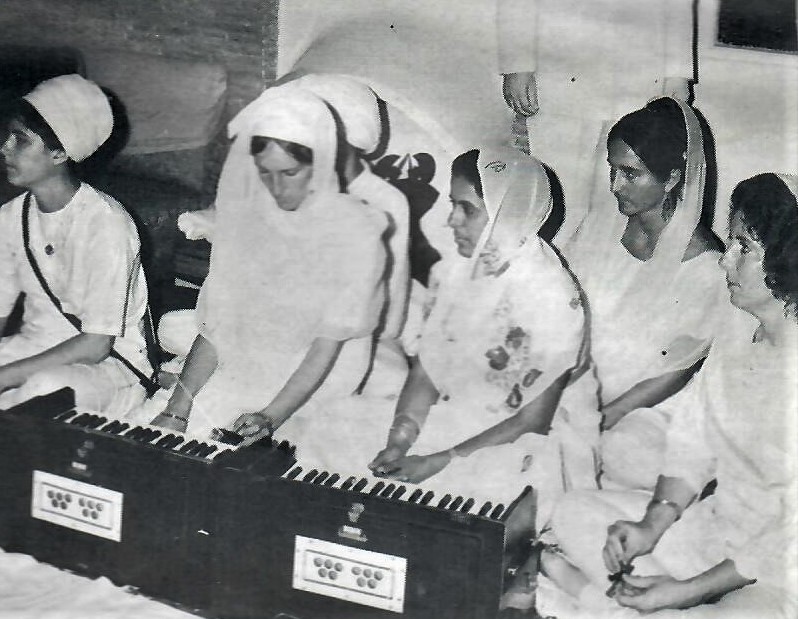
3HO/Sikh Dharma Kirtan Jatha in 1973
For a month, they stayed in New Delhi, practicing Keertan every day. Bibiji was always busy with one or another guest or arranging their coming tour. For his part, Dale Singh took every available opportunity to practice the local languages, Hindi and Punjabi.
At last, it was time to share what they had learned. They found their way to Gurdwara Damdama Sahib, a short walk away, where a congregation of a few thousand awaited them. The ladies, Ganga Kaur and Wilma Kaur at the harmonium and Sat Kirn Kaur on the guitar, performed the two Songs they had been practicing every day. Then Dale Singh gave a little talk in English which was translated into Punjabi.
“Do not be surprised to see American Sikhs,” he said. “Within many of your lifetimes, you will see Sikhs from all countries. It is our prayer that they will live in the brotherhood of the Khalsa as Guru Sahib instructed. The Siri Guru Granth Sahib will be translated into every language of the world. We now have the scriptures with English translation next to the original Gurbaanee in corresponding numbered words and in this way, learn the meaning of Guru Sahib’s Word.”
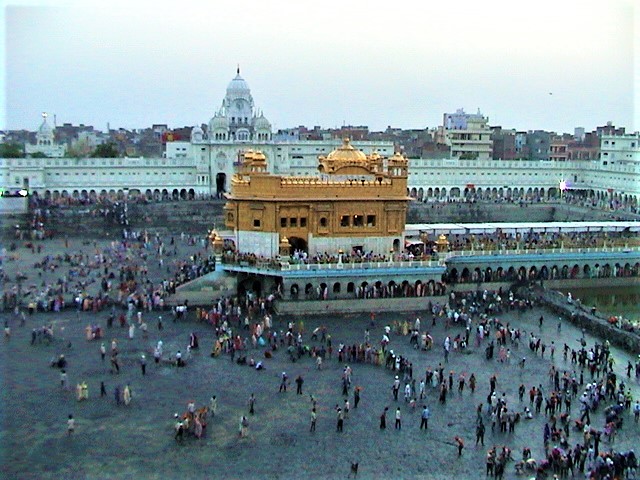
The Cleaning of the Sarovar by 10000s of Devotees
Amritsar
When Dale Singh and his companions arrived at the Amritsar train station, they were met by Giani Mohinder Singh, Secretary of the Shiromani Gurdwara Parbandhak Committee (SGPC), the chief religious organization of Sikh dharma in Punjab, and a number of other well-wishers. After being welcomed, they were taken to their new home at the Akal Rest House, right next to Harimandir Sahib.
Over the following days, the group was taken on tours of Amritsar and the surrounding area. When they visited the historic, brownstone Khalsa College, originally founded in 1892 to provide the opportunity of a Sikh education during the years of British rule, some of the ladies tried to convince Dale Singh to register and become a student there. They also toured Tarn Taran Sahib, where Guru Arjan established a home for lepers, and Khadur Sahib, home to the second Guru, Guru Angad.
What Dale and the others had not realized on coming to Amritsar was what a special special occasion that was. Every fifty years, the Sarovaar – the rectangular pool surrounding Harimandir – is drained of water and the accumulated dust of many years, settled as mud at the bottom, is removed by thousands of devotees. This historic Seva had begun on March 31 with a great deal of ceremony.
On their return to Amritsar, the Americans together with Bibiji, Amarjit Kaur, and Bahadur Singh were busy with everyone else, scooping or carrying big platters of mud – considered the dust of the saints’ feet – on their heads and out of the Sarovaar.
Dale Singh was always occupied in some spiritual pursuit. If he was not doing Seva, he was studying Gurmukhee or Gurmat or engaging a Sevadaar in conversation in Punjabi.
Every day, before midnight, Dale Singh would go to join the crews of devotees regularly cleaning the marble floors of the Baba Deep Singh Shaheedi Gurdwara and Harimandir Sahib. About 2:30 a.m., he would return with some of the precious washings of the holy places cupped in his hands, and coax his sisters in faith, “Bhain jee, Prashaad Lay-o!” offering them the nectar water to drink.
Amritsar happened to be experiencing a sweltering heat wave that April, but it was nothing he could not handle with his usual ingenuity. On an especially hot day, he bought a huge block of ice and brought it to his room. There he sat, stripped down to his Kachheras on the block of ice with the overhead fan going full bore. When Ganga Kaur popped in to see him, she found him blissfully smiling.
After five glorious days and nights in Amritsar, Dale Singh’s group were invited by the Chief Khalsa Diwan to perform Keertan at Bhai Vir Singh Hall. The event passed sweetly, with the congregation listening meditatively and singing along. At the end, Dale Singh rose and gave a talk, thanking the Sangat for being Sikhs, for keeping the spirit of the great Gurus alive, and for showing the group so much love.
-

- Bhai Sahib and Blessed Sangat at Summer Solstice Sadhana 1974
-

- Bhai Sahib as one of Punj Piaray at Summer Solstice 1974
Dayal Singh – A Devoted and Humble Man
Dale Singh was self-critical enough to recognize his own shortcomings. He could also be inventive in overcoming them. During his visit to the home of Guru Amar Das in the town of Khadur Sahib, Punjab, Dale Singh had noticed a hook on the ceiling to which the Guru used to tie a rope attached to his topknot. Being aware of his own habit to nod in and out of awareness in the early morning hours, Dale Singh installed a hook in the ceiling over the place where he always sat during morning Sadhana and tied his rishi knot to the hook on the ceiling with a cord.
Dayal Singh – A True Sevadar
Dale Singh always served langar after Sunday Gurdwara. He did late-night clean-up at the restaurant as a service. Bhai Sahib volunteered for all Seva. He taught through his consistent example of what selfless service is.
Dale Singh never tolerated gossip. He neither spoke nor listened to it. If someone had some juicy morsel to share, he would say, “I don’t want to hear it,” and change the subject.
Bhai Sahib disliked asking anyone to volunteer for Seva in an Akhand Paath. He either worked with the few who loved to do it or did it himself. Dale Singh used to take turns for the 11pm to 3 am shifts in Los Angeles Akhand Paaths, but usually ended up reading most of it.
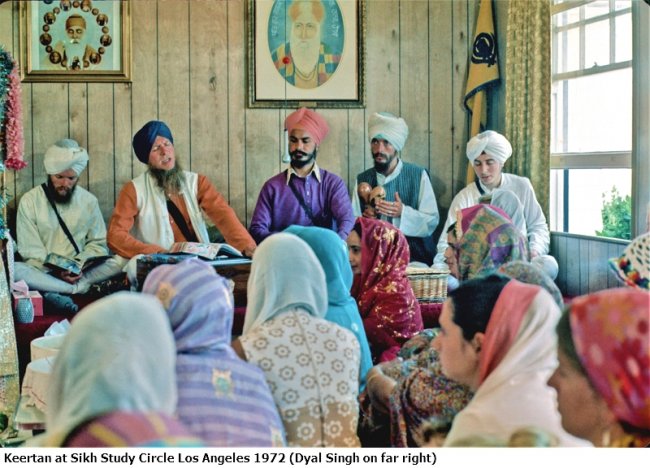
Dayal Singh – A Reverent Man
When Dayal Singh arrived back in Los Angeles, he took up the responsibility of taking care of the Gurdwara at Guru Ram Das Estate. The central obligation at the Gurdwara was to literally “reveal” Siri Guru Granth Sahib for the community early each morning and to return it to a “posture of ease” at the end of each day.
These routines, involved doing a prayer and respectfully unwrapping the Siri Guru, taking a Hukam and leaving it open for others to read in the morning. In the evening, there was another prayer, recitation of Keertan Sohila, a Hukam, then closing the Guru and putting it to bed for the night.
Though Dayal Singh’s home was five kilometers (three miles) away and he had no car, he eagerly accepted his new duties and walked to the Gurdwara every morning before daylight and again in the evening.
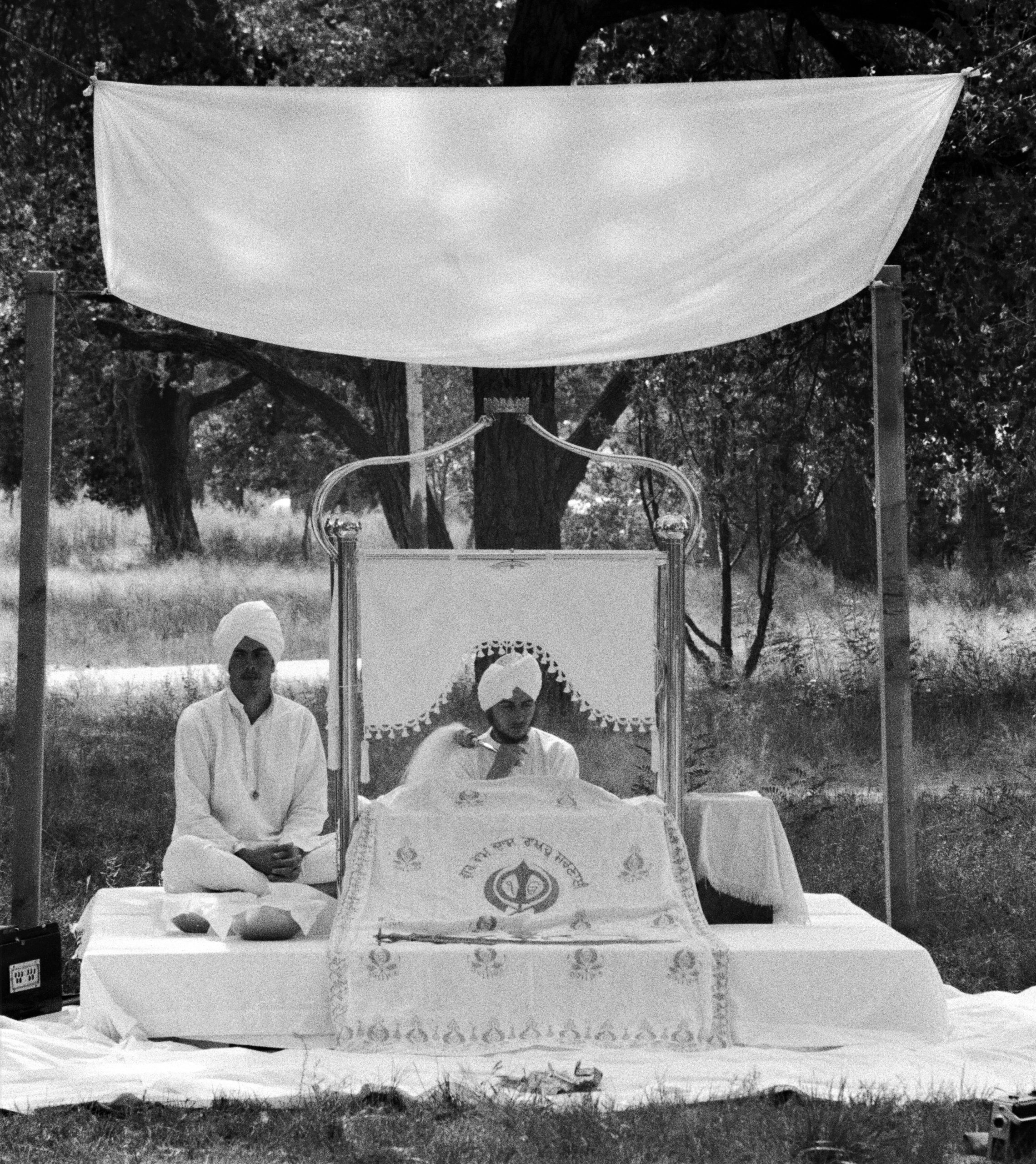
Bhai Sahib Dayal Singh – the Granthee
Homage by SS Sat Nirmal Kaur Khalsa
The first time I saw Bhai Sahib Dayal Singh was some time in the spring of 1975, the night that I moved into Adi Shakti Ashram in West Hollywood. I had been a student of the Siri Singh Sahib’s for almost two years.
I was walking around the grounds of the ashram, so excited and nervous to be living there. It was evening and getting dark. Everyone was preparing for sleep. There was a small, white building that was separate from the other buildings. It looked like a converted garage, which it was. I knocked, but there was no answer. I opened the door. I can still remember the feeling of love and light that flooded that room, which turned out to be a small, beautiful gurdwara.
Bhai Sahib was sitting behind the Guru, doing sukhaasan (closing and putting the Guru “to bed” for the night). He motioned for me to come in. I sat down and watched. I remember the light lavender color of the cover of Siri Guru Granth Sahib. Everything in that room was so calming and pretty. When Bhai Sahib was done, he sat with me and explained sukhaasan and prakaash (the opening and presentation of Siri Guru Granth Sahib).
I had just started attending Sunday gurdwara, but we were still using the 8-volume set of the Guru (with English translation). This was the first time I had ever seen the full one-volume all-Gurmukhee Bir. I remember at the time thinking that he didn’t even know who I was, what my name was or anything about me – and yet he was so open and trusting to show me how to take care of the Guru. It was obvious to me at this first encounter that this was a man who truly loved being a Sikh.
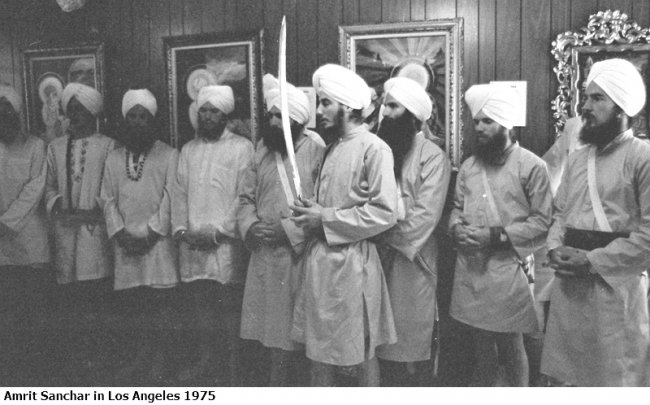
Testimonial
Siri Singh Sahib Bhai Sahib Harbhajan Singh Khalsa Panth Rattan Yogiji:
I put in about forty and some hard years to become Bhai Sahib. He came to me at fifteen. He left us when he was twenty-one or twenty-two and he is a hero, a spiritual hero, immortal. It took him five to six years to become immortal. And he is legendary in obedience, in acknowledging the knowledge, in learning, in experience, in dedication. He is a man who walked in and walked through but left such a deep mark.
Some of you are old, some of you are more knowledgeable, some of you are more experienced, some of you are more rich and anything. But whenever the name of Bhai Sahib Dayal Singh comes, you all have nothing but reverence. Have you noticed this? Have you also studied it, how he earned it and how fast?
Don’t misunderstand me that Western hemisphere and the Sikh history will not become as it is the Sikh history of today. He didn’t do anything. He didn’t sit in a burning fire and didn’t get burnt. He didn’t jump into the ocean and didn’t drown. He didn’t fly. He didn’t walk on water. He never even went on a cross. He never got nailed. He never put hot sand on his body. He did nothing. But He left such a deep mark in you of him and of his spirituality, that all of you whether you like it or not, have to have reverence for him.
Why? He dived deep in himself and he reached to his spirit, and he conquered his own soul. He was an undisputed spiritual leader. Undisputed.
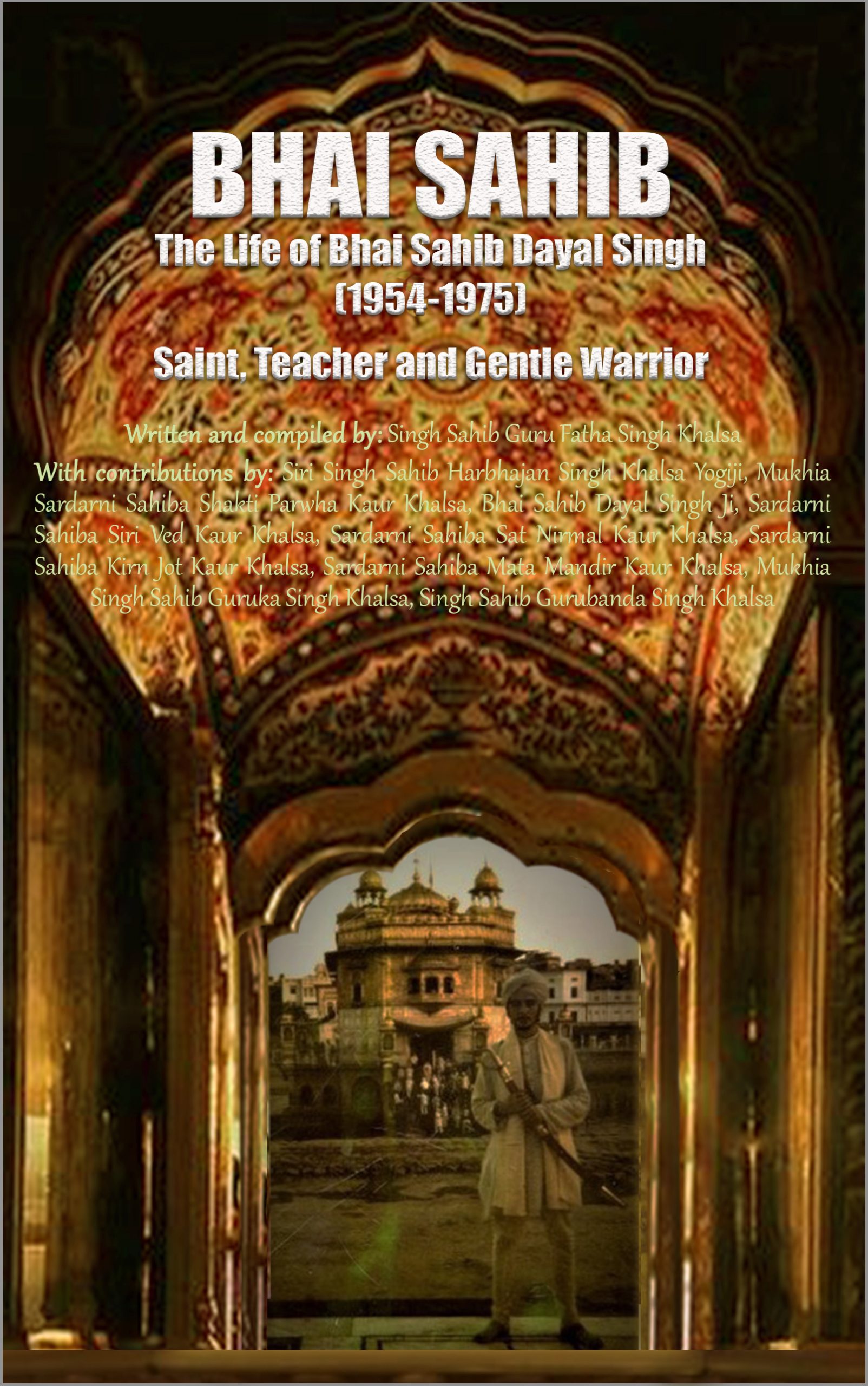
The above passages were excerpted from the writings of Guru Fatha Singh Khalsa. You can read more about Bhai Sahib Dayal Singh in the book written by Guru Fatha Singh called,
“Bhai Sahib: The Life of Bhai Sahib Dayal Singh (1955-1975) Saint, Teacher and Gentle Warrior”.






DimpuCaur says:
Waheguru